
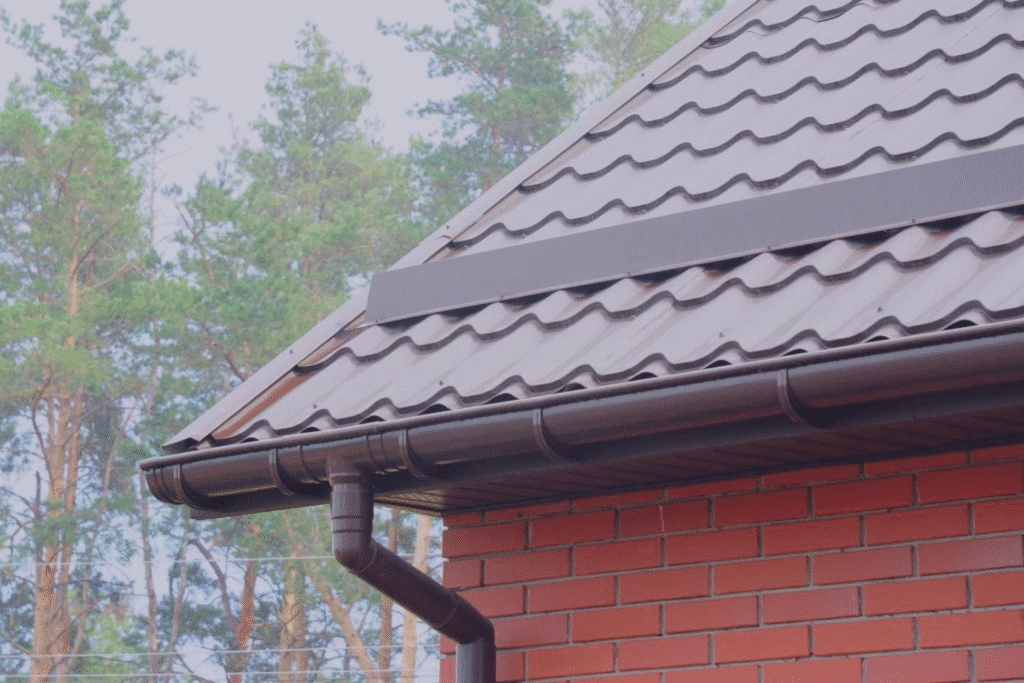
This guide explains the drawbacks of a roof rain diverter, why they are discouraged in many situations, and what safer, more reliable alternatives homeowners should consider instead.
Heavy rain puts a lot of stress on a roof system. When water pours off roof edges, valleys, or upper roof sections, homeowners often look for quick ways to redirect that runoff. One option that comes up frequently is a roof rain diverter.
At first glance, rain diverters seem like a simple fix. They are designed to push water away from certain areas, such as doors, windows, walkways, or lower roof sections. However, rain diverters can introduce new risks, especially in storm-prone regions and in homes working toward FORTIFIED standards.
What Is a Roof Rain Diverter?
A roof rain diverter is typically a strip of metal or plastic installed along the roof surface or edge. Its purpose is to redirect water flow away from a specific area.
Homeowners often consider rain diverters when they notice:
- Heavy water flow near the entry doors
- Splash back against the siding or windows
- Concentrated runoff onto a lower roof section
- Water dripping directly onto walkways
While the intention is to control water, the way diverters interact with roofing materials can create problems.
Why Rain Diverters Can Be Problematic
Rain diverters are not always compatible with how modern roofing systems are designed to shed water. In some cases, they interfere with the roof’s natural drainage path.
Risk of Shingle Damage
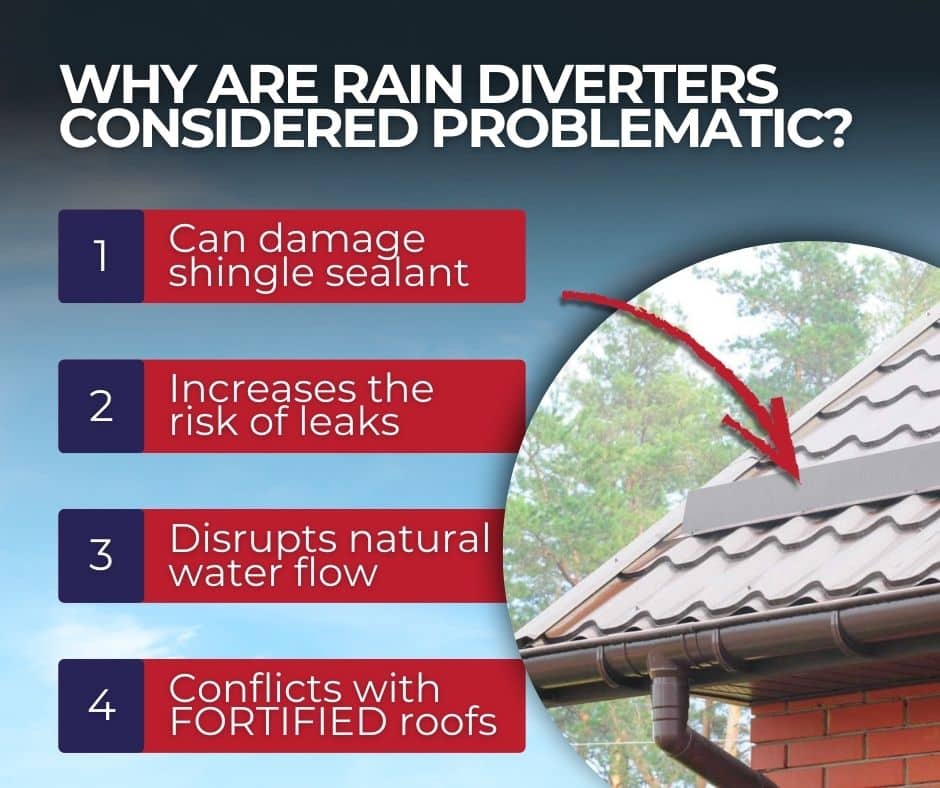
Many rain diverters are installed directly on top of shingles or fastened through roofing materials. This can compromise shingle sealant and create weak points.
According to FORTIFIED Home guidance, attachments that interfere with shingle adhesion or require penetrations can increase the risk of wind damage and water intrusion. Once sealant is disturbed, shingles are more likely to lift during storms.
Increased Leak Potential
Any time something is attached to the roof surface, the risk of leaks increases. Improper fastening, sealant failure, or shifting over time can allow water to enter beneath the roofing materials.
Even diverters that appear secure at installation can become problematic as roofs expand and contract with temperature changes.
Ice and Debris Buildup in Some Regions
In cooler climates or transitional regions, rain diverters can trap debris or ice. This buildup can block water flow and force water back under shingles.
While this may be less common in southern states, debris accumulation from leaves and branches is still a concern across all service areas Knockout Inspections covers.
Interference With Proper Drainage
Roof systems are designed to move water downward and off the roof efficiently. Diverting water sideways or concentrating it in new areas can overload other components.
This can lead to:
- Excessive wear on the lower roof sections
- Splash back against siding or trim
- Overwhelmed gutters or downspouts
Instead of solving the problem, the diverter may simply move it elsewhere.
Why Rain Diverters Are Discouraged in FORTIFIED Roof Systems
FORTIFIED roof standards focus on keeping the roof deck sealed, shingles properly adhered, and water flowing in predictable paths.
The FORTIFIED Home program specifically advises against the use of rain diverters because they can:
- Damage shingle sealant
- Increase uplift risk during high winds
- Create points of failure during storms
FORTIFIED guidance emphasizes improving the roof system as a whole rather than adding accessories that disrupt its performance.
For homeowners pursuing FORTIFIED evaluations or renewals, rain diverters may conflict with best practices.
Common Situations Where Rain Diverters Are Considered
Understanding why homeowners consider rain diverters helps explain why alternatives are often a better choice.
Water Over Doors or Windows
Upper roof sections may dump water directly over entry points during heavy rain.
Concentrated Runoff Onto Lower Roofs
Multi-level roof designs can funnel large volumes of water onto lower slopes.
Splash Back Near Foundations
Heavy runoff near the base of the home can contribute to erosion or moisture issues.
While these are real concerns, rain diverters are rarely the best long-term solution.
Better Alternatives to Rain Diverters
Instead of adding attachments to the roof surface, homeowners should focus on solutions that work with the roof system, not against it.
Proper Gutter and Downspout Design
One of the most effective alternatives is improving the gutter system.
This may include:
- Correct gutter sizing for the roof area
- Additional downspouts to handle heavy flow
- Proper slope to prevent overflow
- Extensions that move water farther from the foundation
Well-designed gutters manage runoff without compromising shingles.
Drip Edge Installation and Placement
Drip edge plays a critical role in guiding water off the roof and into gutters. When the drip edge is missing, damaged, or improperly installed, water can run behind gutters or soak fascia boards.
Ensuring proper drip edge installation can often solve runoff issues without additional devices.
Valley and Roof Geometry Improvements
In some cases, roof valleys concentrate too much water into a single path. Proper flashing and valley design help manage this flow safely.
During roof replacements or major repairs, improving valley construction can reduce problem areas significantly.
Surface Grading and Drainage Adjustments
Sometimes the issue is not the roof itself but where the water ends up. Improving ground slope, adding splash blocks, or installing drainage systems can protect the home without altering the roof.
FORTIFIED Roof Upgrades
FORTIFIED roof enhancements focus on sealing the roof deck, improving attachment, and strengthening edges and connections.
These upgrades help roofs handle heavy rain and high winds more effectively, reducing the need for add-on solutions like rain diverters.
Why Inspection Matters Before Making Changes
Before installing any roof accessory, it is important to understand what is actually causing the water issue.
A professional inspection can help identify:
- Improper drainage paths
- Missing or damaged components
- Installation defects
- Wear patterns that indicate underlying problems
Adding a rain diverter without addressing the root cause can mask issues and lead to bigger problems later.
How Knockout Inspections Helps Homeowners
Knockout Inspections provides home inspections and FORTIFIED evaluations across multiple storm-exposed states. Their role is to help homeowners understand how their roof system is performing and where vulnerabilities exist.
Rather than recommending quick fixes, inspections focus on:
- Roof drainage behavior
- Shingle condition and attachment
- Flashing and drip edge performance
- FORTIFIED readiness and compliance
This information allows homeowners to make informed decisions that protect their roof long-term.
Related Questions Homeowners Often Ask
Do rain diverters ever make sense?
In limited situations and when installed correctly, they may provide short-term relief. However, they are generally not recommended for FORTIFIED roofs or long-term solutions.
Can a rain diverter void roofing warranties?
In some cases, yes. Roof manufacturers may not approve attachments that penetrate or alter shingles.
Are rain diverters allowed under FORTIFIED standards?
FORTIFIED guidance discourages their use due to potential damage to shingle sealant and increased wind risk.
What is the safest way to manage heavy roof runoff?
Proper gutter systems, drip edge installation, and roof design improvements are safer and more reliable.
When to Call a Professional
If you are experiencing heavy roof runoff, leaks, or drainage concerns, a professional inspection is the best first step.
You should consider an inspection if:
- Water consistently pours over entry points
- Gutters overflow during storms
- Shingles show signs of lifting or damage
- You are pursuing a FORTIFIED evaluation or renewal
Understanding the cause helps avoid unnecessary or risky fixes.
Conclusion
A rain diverter may seem like a simple roof solution, but it often introduces new risks to the roof system. For homes in storm-prone regions and for those pursuing FORTIFIED standards, the drawbacks often outweigh the benefits.
Focusing on proper drainage design, roof components, and system-level improvements provides safer and more durable protection. A professional inspection helps identify the right solution for your home and ensures changes support long-term roof performance.