

Coastal homes face more wear and tear than homes farther inland. Salt, wind, moisture, and strong sun can break down materials faster, which means the exterior of your home needs more attention to simple cleaning steps that can protect your roof, siding, windows, and outdoor systems.
This guide explains the coastal cleaning tasks that matter most, how to avoid mistakes, and when to bring in a professional. It also highlights how a clean exterior supports FORTIFIED guidelines and helps your inspector spot issues early.
Why Exterior Cleaning Matters in Coastal Areas
Homes near the coast face more environmental stress than inland homes.
Research from the National Association of Home Builders found that coastal humidity and salt increase material wear by up to 40% compared to dry inland regions.
Salt crystals hold moisture against surfaces, which increases the risk of corrosion and early failure of roofing materials, fasteners, and exterior hardware.
The Florida Building Commission notes that wind-driven rain is one of the top causes of envelope failure in coastal homes. When dirt, algae, or salt block drainage paths, wind pressure can push water into small gaps.
Routine exterior cleaning helps with:
- Slowing down weathering
- Limiting algae and mold growth
- Keeping gutters clear for better drainage
- Protecting windows and doors from corrosion
- Helping the roof shed water
- Reducing pest activity around the home
- Staying aligned with FORTIFIED standards for durability

Start With a Simple Walkaround
A simple walkaround saves time by showing what needs attention right now. According to the Insurance Institute for Business and Home Safety, early detection of small exterior problems reduces storm damage risk by more than 50%.
Look for:
- White crust or film from salt
- Green algae on shaded siding
- Dark streaks under the roof edges
- Overflowing or clogged gutters
- Dirt-packed window tracks
- Debris around the HVAC outdoor unit
- Loose trim or peeling paint
- Soil washed out around the foundation
These signs point to small problems that cleaning can solve before they lead to damage.
What You Notice and What It Means
| What You Notice | What It Means | What Helps |
| White salt film | Salt buildup | Rinse with fresh water |
| Green patches | Algae growth | Mild cleaner and soft brush |
| Dark roof streaks | Gutter overflow | Clear gutters and downspouts |
| Rust spots | Metal corrosion | Rinse, clean, and monitor |
| Mucky window tracks | Dirt and salt mix | Vacuum and wipe clean |
Rinse Salt From Siding and Windows
Salt spray is one of the biggest issues for coastal homes in Florida, Alabama, Mississippi, and Louisiana. A gentle rinse removes salt before it dries and traps moisture.
Tips for safe rinsing:
- Use a regular garden hose, not a pressure washer
- Start at the top and work downward
- Rinse both the siding and window frames
- Clean window tracks with mild soap and a brush
- Add this step after storms or windy days
This helps protect paints, coatings, and seals.
Clean the Roof Carefully
Roof cleaning is one of the most valuable steps for coastal homes. Salt and algae shorten the life of shingles and coatings.
The Asphalt Roofing Manufacturers Association reports that improper pressure washing can reduce roof life by up to 50%.
Safe roof cleaning tips:
- Never use a pressure washer
- Use low-pressure rinse systems or soft-wash solutions
- Keep bleach mixes away from metal flashing when possible
- Remove leaves from valleys and roof edges
- Rinse the soffits and fascia afterward
- Check for cracked, lifted, or missing shingles
- Clear branches and debris trapped by wind gusts
Roof cleaning is one of the most valuable steps for coastal homes. Salt and algae shorten the life of shingles and coatings.
Keep Gutters and Downspouts Flowing
Clogged gutters are a major cause of moisture problems in coastal homes. Salt, leaves, and roof grit pile up faster in humid climates.
FEMA reports that backed-up gutters raise the chance of interior water intrusion by increasing roof edge pressure and driving water toward the fascia.
Gutter cleaning tips:
- Scoop debris out by hand or with a gutter tool
- Flush the gutters with a hose to be sure water flows
- Check downspouts for blockages
- Look for leaks or loose fasteners
- Confirm that water drains away from the foundation
Clean gutters also help reduce the chance of water intrusion during storms, which is a key part of home resilience.
Wash Exterior Walls the Right Way
Siding collects dust, pollen, algae, and salt. Washing keeps the outside looking clean and helps materials last longer.
Simple cleaning steps:
- Mix mild soap with water
- Use a soft brush or long-handled siding brush
- Rinse with a hose
- Clean in small sections to avoid streaks
- Rinse near electrical panels with care
- Avoid blasting water upward at small seams
Homes near the coast often need this more than once a year, especially if they face strong winds from the Gulf.
Protect Outdoor HVAC Systems
Your outdoor HVAC unit works harder in coastal areas. Salt speeds up corrosion, and debris reduces airflow. The Department of Energy reports that restricted airflow reduces cooling efficiency by up to 30%.
Care tips:
- Rinse the unit gently with fresh water
- Clear leaves, grass, or sand from around the base
- Keep shrubs trimmed back at least two feet
- Check for rust on the top cover and screws
- Clean the coil fins with a fin-safe cleaner if needed
A clean unit improves airflow and helps your system cool more efficiently during hot months.
Clean Around Doors, Windows, and Trim
Salt and moisture can cause small gaps around doors or windows to grow over time. Cleaning helps you spot issues early.
Check for:
- Mildew or algae
- Dirt packed into tracks
- Rust on hinges or screws
- Loose trim
- Cracked caulk
Clean these areas with mild cleaners. If you see gaps, bring them up during your next inspection or have them sealed.
Simple Mistakes to Avoid
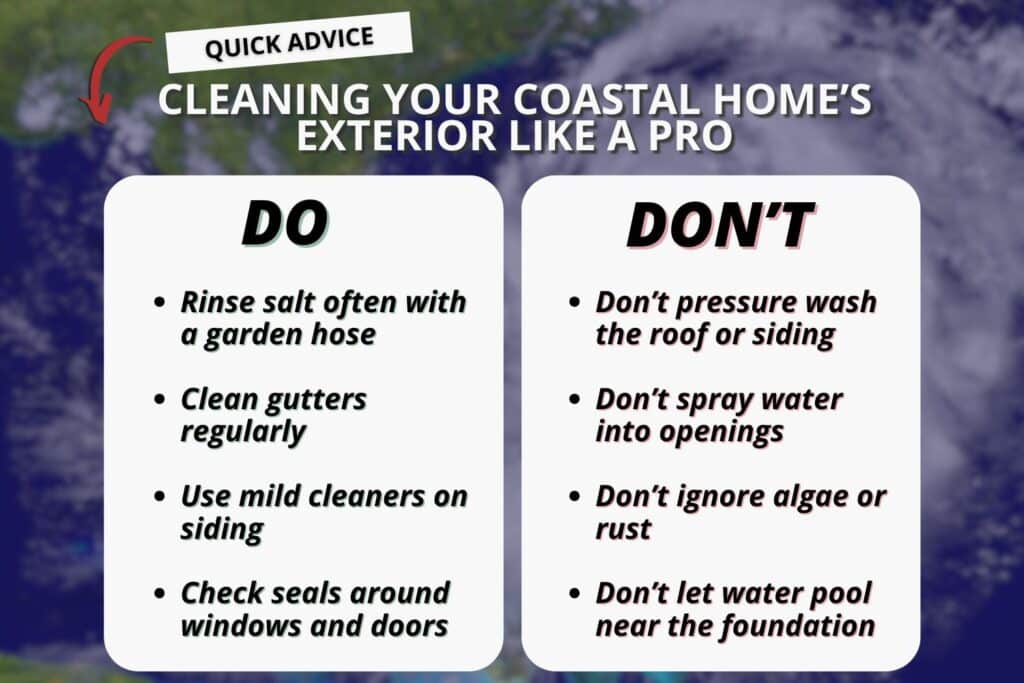
Many homeowners try to clean fast and end up causing damage by accident. Avoid these common mistakes:
- Using high-pressure spray on the siding or the roof
- Mixing harsh chemicals without testing
- Spraying water directly into vents
- Washing electrical boxes or outlets
- Scrubbing painted areas with stiff brushes
- Letting dirty runoff pool around the foundation
Gentle cleaning is safer for coastal materials that already face stress from salt and humidity.
Seasonal Cleaning Tips for Coastal Weather
Your routine may change based on the time of year.
Before storm season:
- Clear gutters
- Rinse salt from siding
- Trim vegetation away from the home
- Check roof edges and flashing
- Clean outdoor HVAC space for better airflow
After major storms:
- Rinse all exterior surfaces
- Remove branches or blown-in debris
- Check for new stains or moisture marks
- Clean window screens
- Inspect for signs of lifted shingles or loose trim
Winter and early spring:
- Wash siding on shaded sides to remove algae
- Clean around doors where moisture collects
- Rinse your HVAC unit to remove winter salt exposure
Other Helpful Questions
Does cleaning help with wind ratings or FORTIFIED?
Cleaning does not raise your rating, but it reveals weak points. Clear surfaces help inspectors see damage early, which supports a stronger FORTIFIED approach.
Should I clean before or after a home inspection?
Both help. Cleaning before the inspection improves visibility. Cleaning after the inspection helps you act on findings.
Can cleaning reduce pest problems?
Yes. Removing debris and moisture reduces areas where ants, roaches, and other pests hide.
When to Call a Professional
Knockout Inspections can help you understand what damage may be hidden, what should be repaired, and how to maintain a strong, storm-ready home.
Contact a team of professionals when…
- You notice stains that will not rinse away
- Algae keeps returning
- You suspect small roof leaks or soft spots
- You see rust forming on exterior hardware
- You need help washing higher siding or roof areas
- Strong winds have blown debris onto the roof
- You plan a FORTIFIED upgrade and want a clean surface for evaluation
Conclusion
Regular exterior cleaning protects your coastal home from salt, moisture, and wind-driven debris. It also helps you prepare for seasonal storms and gives your inspector a clear view of your home’s condition. With the right routine, your home stays cleaner, stronger, and better protected year-round.
If you want a professional inspection or support with FORTIFIED readiness, Knockout Inspections is here to help.