
Getting a FORTIFIED home certification means your home has been independently verified to meet a beyond-code standard for wind and storm resistance. The process involves hiring a certified evaluator, completing required upgrades, and submitting documentation to the Insurance Institute for Business and Home Safety (IBHS) for review.
Once issued, the designation is valid for five years and must be renewed to keep your insurance benefits in place. At Knockout Inspections, we walk homeowners through every step, from the first inspection to the five-year renewal.
What Is a FORTIFIED Home Certification?
A FORTIFIED designation is a written certificate issued by IBHS confirming that your home was built, re-roofed, or retrofitted to meet the FORTIFIED standard. It is not a building code requirement. It is a voluntary program backed by decades of research into how homes fail during severe weather.
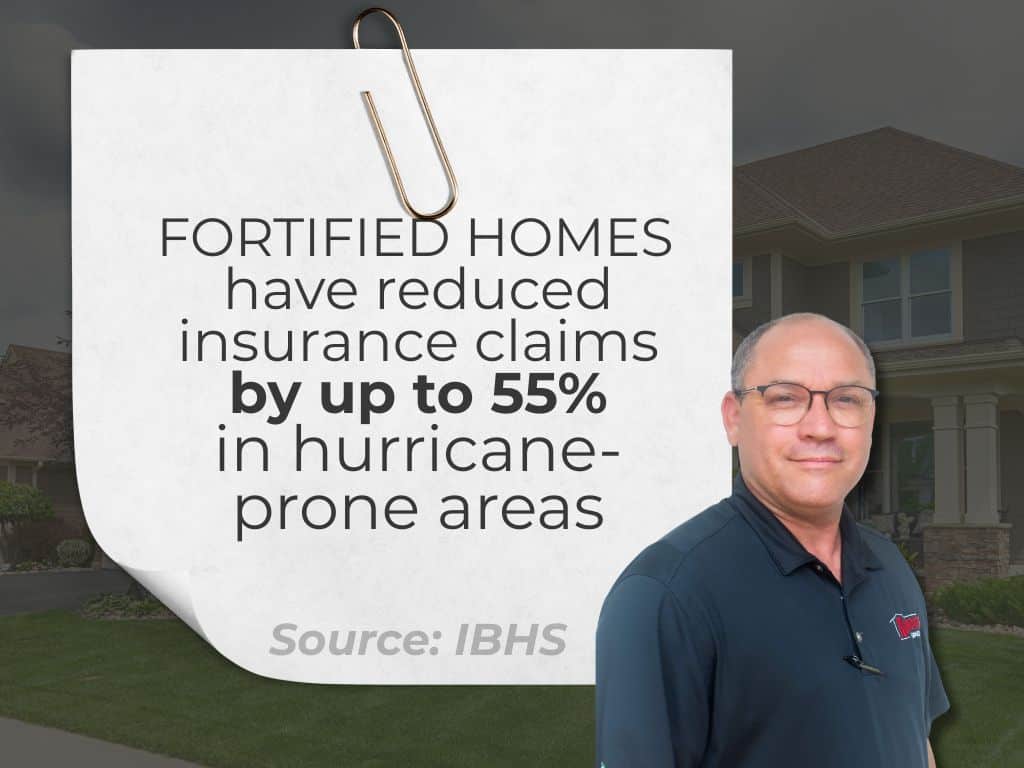
According to IBHS, FORTIFIED homes with active designations have shown significantly reduced claim frequency compared to standard construction. The certification also serves a practical financial purpose: most insurance carriers require a current, active designation certificate to apply FORTIFIED-related premium discounts. If the certificate lapses, the discount can disappear.
The program covers single-family homes, duplexes, townhomes, and certain manufactured homes. It applies to both new construction and existing homes.
The Three Levels of FORTIFIED Designation
There are three levels of FORTIFIED certification. Each level builds on the one below it. You must earn lower levels before advancing to higher ones.
FORTIFIED Roof
This is the most common starting point for existing homes. It focuses on the roof system: stronger deck attachment using ring shank nails, a sealed roof deck to stop water from entering if shingles are damaged, improved drip edge and flashing, and a secondary water barrier. This level is available for re-roofing projects and is the level most tied to insurance discounts in the Gulf Coast and Southeast states.
FORTIFIED Silver
Silver adds protections beyond the roof. It addresses windows, doors, and other openings with impact-resistant and pressure-rated products. Gable end bracing is also required. Homeowners pursuing Silver must first meet all Roof requirements.
FORTIFIED Gold
Gold is the highest level and requires a continuous load path that connects the roof to the walls, the walls to the floors, and the floors to the foundation.
Because this level requires access to structural framing, it is typically completed during new construction or a full gut renovation. It is not practical for most re-roofing projects on existing homes.
How Do You Get a FORTIFIED Home Certification?
The process is straightforward when you involve the right people from the beginning. A certified FORTIFIED Evaluator must be part of every step. Without an evaluator involved throughout, your home will not qualify for designation, regardless of the work completed.
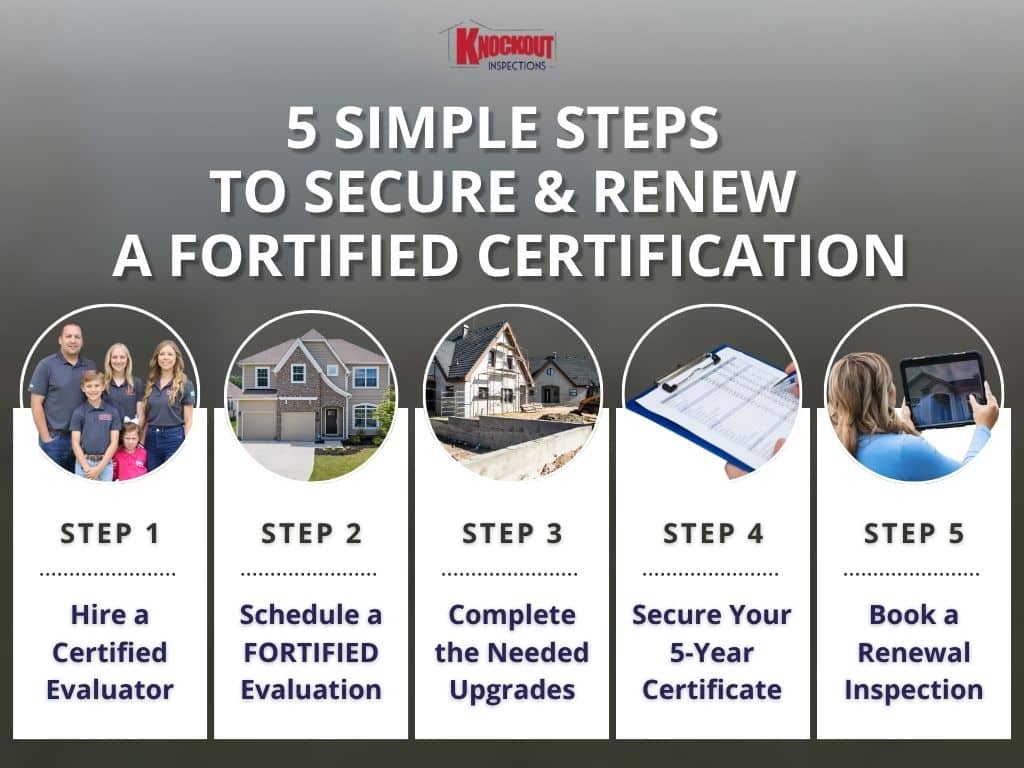
Step 1: Hire a Certified FORTIFIED Evaluator
Your evaluator is the most important part of the process. Evaluators are trained and certified by IBHS, and they are the only professionals authorized to document and submit your home for designation. They work alongside your contractor, not after the work is finished.
At Knockout, our certified FORTIFIED evaluators are available across Alabama, Florida, Louisiana, Mississippi, and Kentucky. You can also find evaluators through the official IBHS provider directory.
Step 2: Complete the Initial Inspection
For existing homes, your evaluator starts with a current conditions report. This inspection looks at your roof covering, deck attachment, underlayment, drip edge, gable ends, openings, and wall-to-roof connections. The report tells you exactly what upgrades are required to reach the level you want.
Step 3: Make the Required Upgrades
Once you know what’s needed, you hire a roofing contractor or builder to complete the work. Your evaluator stays involved throughout. They capture photographs at each stage, document the materials used, and verify that the installation meets the FORTIFIED standard. Getting contractor bids before starting any work is a good idea. The evaluator can help you confirm that each bid includes the correct materials and methods.
Typical upgrades at the Roof level include ring shank nails for deck attachment, a self-adhering secondary water barrier, sealed deck seams, and improved edge details. The additional cost for a 2,000-square-foot home is generally between $1,000 and $3,000 above a standard re-roof, according to IBHS estimates.
Step 4: Submit Documentation to IBHS
When the work is done, your evaluator compiles the full documentation package. This includes photographs of every required element, certified testing reports, manufacturer installation instructions, and FORTIFIED compliance forms. The evaluator submits this package directly to IBHS for review by their engineering team.
Step 5: Receive Your Designation Certificate
Once IBHS confirms your home meets the standard, they issue a designation certificate and send it to your evaluator, who delivers it to you. The certificate includes your unique FEH number and the expiration date, which will be five years from the date of issue. You then bring a copy of that certificate to your insurance agent to apply for any applicable discounts.
How FORTIFIED Certification Affects Your Insurance
Insurance savings vary by state and carrier, but they can be significant. In Alabama, the state-mandated discount range for FORTIFIED homes runs from 20 to 35 percent at the Roof level, 35 to 45 percent at Silver, and 40 to 50 percent at Gold. Several other states have enacted similar requirements, and many carriers offer voluntary discounts in states without mandated programs.
The discount is tied to your active designation certificate. Most insurers require a current copy on file. If your certificate lapses, your carrier may remove the discount at your next renewal. This is the main reason keeping your FORTIFIED certification current matters beyond the structural protection itself.
For homes purchased with an existing FORTIFIED designation, ask the seller for the original certificate and note the expiration date. The designation stays with the property, but the certificate must remain active to maintain any insurance benefits.
How Does a FORTIFIED Renewal Work?
Your FORTIFIED designation does not last forever. It expires five years from the date it was issued. Renewing it requires a re-designation inspection by a certified evaluator.
What Happens at the 5-Year Mark
IBHS sends a courtesy notice approximately 90 days before your certificate expires. That notice includes your FEH number and the name of the evaluator who performed your original inspection. You are not required to use the same evaluator for renewal.
The renewal inspection focuses on the exterior of the home. If the roof covering is in good condition and no structural additions or changes have been made since the original designation, the re-designation typically requires just one site visit. Your evaluator documents the current condition, takes photographs, and submits a renewal application to IBHS. Once approved, a new certificate is issued. You will notice the word “Existing” printed on the updated certificate, which simply indicates the renewal was completed without replacing the roof.
After receiving the updated certificate, send a copy to your insurance carrier to confirm your discount stays in place.
For more on the renewal process and what to expect at each level, see our full guide on FORTIFIED home redesignations.
What If Your Certification Has Already Expired?
IBHS allows renewals to be submitted up to one year after the expiration date at the standard processing fee. If more than one year has passed but less than five years, an additional $50 processing fee applies. If five years have passed since the certificate expired, the home must go through a full new evaluation to earn a fresh designation.
Homeowners with a Gold certificate should pay close attention to this timeline. For more details on Gold-specific renewal requirements, see our post on what to know about FORTIFIED Gold certificate renewal.
The easiest approach is to schedule your renewal inspection about two months before the expiration date. That gives enough time for the IBHS review and avoids any gap in your certification status.
Related Questions to Explore
How much does a FORTIFIED home certification cost? The cost has two parts. First, there is the cost of any required construction upgrades. For a re-roofing project on a 2,000-square-foot home, IBHS estimates the additional cost is between $1,000 and $3,000 above a standard re-roof. For a complete picture of your costs, get in touch with a FORTIFIED evaluator!
Does FORTIFIED certification transfer when you sell your home? Yes. The designation is tied to the property, not the homeowner. When you sell, the designation and its remaining validity transfer to the buyer. The buyer should receive a copy of the original certificate and note the expiration date so they can plan for renewal.
Can you upgrade your FORTIFIED level after certification? Yes, with some conditions. If your home currently has a FORTIFIED Roof designation, you can pursue Silver by completing the additional required upgrades with a certified evaluator. Upgrading to Gold is more complex because it requires access to structural framing. For most existing homes, the practical ceiling is Silver unless significant renovation work is already planned.
What happens if you make changes to a FORTIFIED home? Structural changes, additions, or re-roofing work done after your designation is issued can affect your certification. If you replace your roof, add a room, enclose a porch, or change windows or doors, your evaluator will need to assess whether the work still meets the FORTIFIED standard.
Is FORTIFIED certification worth it for existing homes? For homeowners in hurricane-prone or high-wind regions, the return on investment is strong. The upfront cost of a FORTIFIED re-roof is modest compared to the insurance savings over time, particularly in states with mandated discounts. A re-roof that costs $2,000 more than standard can pay for itself within a few years through reduced premiums.
The structural benefit is separate: FORTIFIED homes have been documented to perform significantly better than standard construction during major wind events.
When to Call a Professional
You should contact a certified FORTIFIED evaluator before any re-roofing project, not after. The evaluator must be present and document the work as it happens. Bringing one in after the roof is finished means the required documentation was never collected, and the home will not qualify for designation.
Also, reach out to an evaluator if you are approaching your five-year renewal date and want to confirm your certificate is still valid, if you have made any structural changes since your last designation, or if you purchased a home with an existing FORTIFIED certificate and are unsure of the expiration date or current status.
At Knockout Inspections, our team of certified FORTIFIED evaluators is available across the Gulf Coast region. We offer renewal evaluations at the most competitive rates in the area, and we handle the entire documentation and submission process for you. To schedule an evaluation or ask questions about your certification, visit our FORTIFIED Home services page.
Conclusion
Getting and keeping a FORTIFIED home certification is a straightforward process when you know the steps. Hire a certified evaluator before work begins, complete the required upgrades with proper documentation, and submit to IBHS for review. Once you have your certificate, protect it by tracking the five-year expiration date and scheduling renewal before it lapses. The certification keeps your insurance discounts active and confirms your home is built to withstand severe weather.
Ready to get started or renew your existing designation? Contact Knockout Inspections to schedule an evaluation.