
Most HVAC problems do not start as emergencies. They start as small issues that slowly affect comfort, efficiency, and reliability. This practical HVAC maintenance checklist explains what homeowners should pay attention to, what maintenance actually helps, and when comfort or efficiency problems point to something deeper than routine upkeep.
Homeowners are often told that HVAC maintenance means changing filters and scheduling a yearly tune-up. While those steps matter, they only address part of the system. Heating and cooling performance also depends on airflow, duct layout, equipment sizing, and how well the system matches the home itself. Here’s what you should know.
Why HVAC Maintenance Matters Beyond Comfort
HVAC systems do more than control temperature. They influence energy costs, humidity, indoor air quality, and how evenly a home feels from room to room.
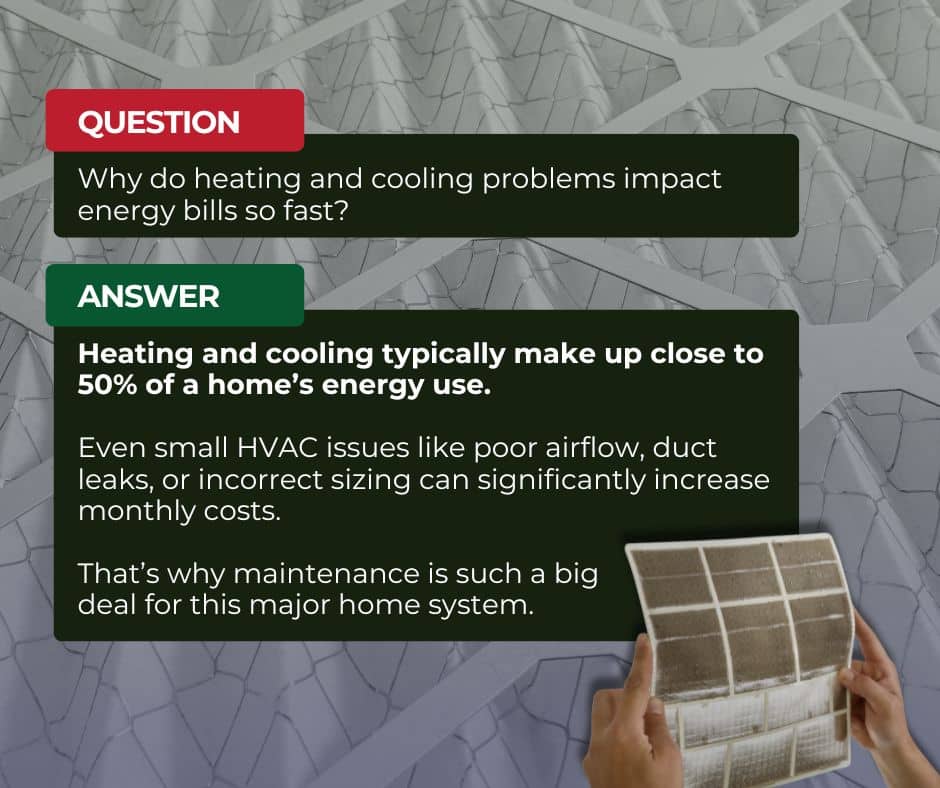
According to Energy Star data, heating and cooling can account for nearly half of a home’s total energy use. When systems are poorly maintained or poorly designed, that percentage often climbs.
Homeowners commonly notice the impact through:
- Rising utility bills without a clear explanation
- Rooms that feel hotter or colder than others
- Longer run times and constant cycling
- Increased repair frequency
- Shortened system lifespan
Maintenance helps reduce these issues, but only when it supports how the system was designed to operate.
Maintenance Problems vs System Design Problems
Not every HVAC issue is caused by neglect.
Some homes struggle with comfort even when filters are changed regularly, and service visits are consistent. In those cases, the problem is often related to how the system was selected or installed.
Design-related issues may include:
- Equipment that is too large or too small for the home
- Ductwork that cannot move enough air
- Poor airflow to certain rooms
- Limited return air paths
Maintenance keeps parts clean and operating. Design determines whether the system can deliver comfort in the first place. Understanding that difference helps homeowners avoid chasing the wrong solution.
A Practical HVAC Maintenance Checklist for Homeowners
This checklist focuses on realistic steps homeowners can take and observations that signal when professional evaluation is needed.
Regular Homeowner Maintenance Tasks
These actions help preserve basic performance and prevent unnecessary strain on the system.
Homeowners should routinely:
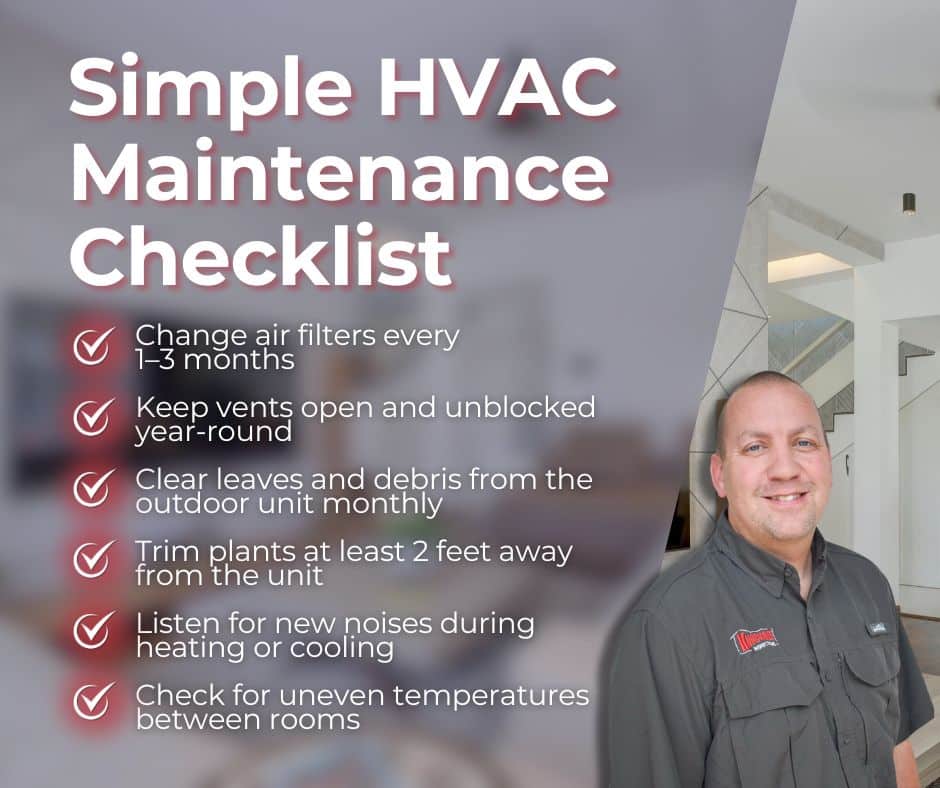
- Replace HVAC filters based on system needs and household conditions
- Keep supply and return vents uncovered and unobstructed
- Listen for new noises such as rattling or grinding
- Monitor for unusual odors during operation
- Check thermostat settings and responsiveness
These steps support daily operation, but they do not address airflow balance or system sizing.
Outdoor Unit Care and Clearance
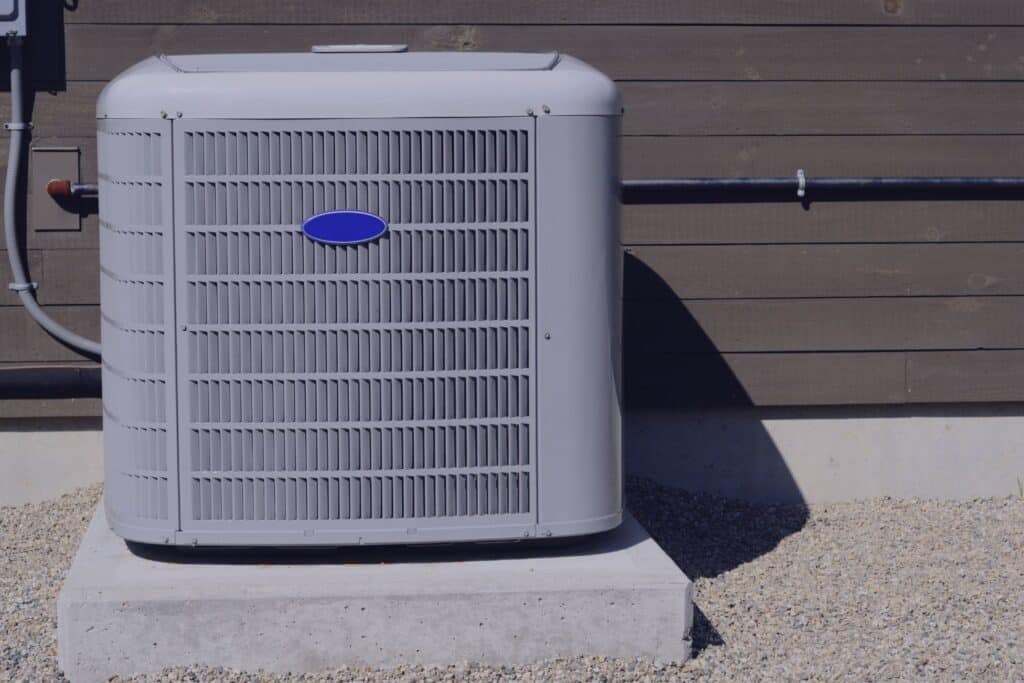
The outdoor unit needs clear airflow to operate efficiently.
Homeowners should make sure:
- Vegetation is trimmed back at least two feet
- Leaves, dirt, and grass clippings are removed regularly
- The unit remains level and stable
- Objects are not stored against the equipment
Restricted airflow forces the system to work harder, which increases wear and energy use over time.
Indoor Unit and Mechanical Area Awareness
Indoor components are often hidden in closets, garages, or attics, which makes issues easier to miss.
Homeowners should periodically look for:
- Signs of water around the unit
- Rust or corrosion on components
- Loose insulation or damaged panels
- Evidence of past drainage problems
Recurring moisture or corrosion often points to airflow or drainage issues that require professional attention.
Why Airflow Is One of the Most Overlooked HVAC Issues
Airflow problems are one of the most common reasons HVAC systems underperform, yet they are rarely discussed during routine maintenance.
When air cannot move properly, even a new system will struggle to heat or cool effectively. Poor airflow can cause rooms to feel uncomfortable, increase humidity issues, and shorten equipment life.
Common airflow problems include:
- Dirty or restrictive filters
- Ducts that are too small or poorly routed
- Blocked or undersized return vents
- Leaky or disconnected duct sections
If airflow is limited, maintenance alone cannot restore comfort. Airflow evaluation becomes essential.
Ductwork Plays a Bigger Role Than Most Homeowners Expect
Ducts deliver conditioned air throughout the home. When duct systems are poorly designed or deteriorated, comfort and efficiency suffer.
During inspections, common duct-related issues include:
- Crushed or disconnected duct sections
- Poor sealing at joints
- Inadequate duct sizing
- Uneven airflow between rooms
Because ductwork is hidden, problems often go unnoticed for years. Proper duct evaluation helps explain persistent comfort issues that maintenance alone cannot fix.
Why Proper System Sizing Affects Maintenance Outcomes
Many homeowners assume their HVAC system was sized correctly. In reality, improper sizing is common.
When a system is oversized, it may cool the home quickly but fail to manage humidity. When undersized, it may run constantly without reaching comfortable temperatures.
Proper sizing helps:
- Reduce wear from short cycling
- Improve humidity control
- Extend equipment lifespan
- Make maintenance more effective
Load calculations help determine whether the system matches the home’s actual needs rather than relying on assumptions.
Efficiency Is About More Than System Age
Older systems are not automatically inefficient, and newer systems are not automatically efficient.
Efficiency depends on:
- Proper installation
- Adequate airflow
- Correct equipment sizing
- Well-designed ductwork
A well-maintained older system with good airflow can outperform a newer system installed without proper design considerations.
Maintenance preserves efficiency, but inspections help identify what limits it.
HVAC Maintenance Checklist by System Area
| System Area | What to Watch For | Why It Matters |
| Filters | Dirty or restrictive filters | Airflow and efficiency |
| Ducts | Leaks or disconnections | Comfort and energy loss |
| Outdoor unit | Debris or poor clearance | System strain |
| Indoor unit | Moisture or corrosion | Equipment damage |
| Thermostat | Inconsistent response | Comfort control |
This overview should help you understand where issues commonly begin. and their impacts.
HVAC Performance and Home Resilience
HVAC systems are tested most often during extreme conditions, not mild weather.
When temperatures stay high for long periods or weather events interrupt power, systems with airflow limitations, sizing issues, or deferred maintenance are more likely to struggle. Breakdowns during these periods often reveal problems that existed long before the weather changed.
Homes with HVAC systems that are properly maintained and well-matched to the home tend to:
- Maintain more consistent temperatures under stress
- Recover faster after outages
- Place less strain on major components
- Experience fewer emergency failures
Maintenance supports reliability, but resilience depends on how well the system is set up to handle demand.
Why HVAC Problems Often Repeat
Recurring HVAC issues usually point to an unresolved underlying cause.
If comfort complaints return each season despite regular servicing, the issue is rarely maintenance-related. More often, it involves airflow imbalance, duct limitations, or equipment that does not align with the home’s layout.
Common repeating problems include:
- Rooms that are consistently uncomfortable
- Systems that run constantly during peak weather
- Uneven temperatures between floors
- Ongoing humidity concerns
Without identifying the root cause, these issues tend to resurface regardless of how often the system is serviced.
When Maintenance Stops Solving the Problem
Routine maintenance has limits.
There is a point where replacing filters and scheduling tune-ups no longer produces meaningful improvements. When that happens, continued servicing may address symptoms without correcting the cause.
Maintenance alone is usually insufficient when:
- Comfort issues persist year after year
- Energy costs continue rising without explanation
- Repairs become more frequent
- Equipment replacement is suggested without clear justification
At this stage, evaluating how the system functions as a whole becomes more useful than additional maintenance.
When a Professional Inspection Is Worthwhile
Routine maintenance helps keep a system running, but it does not explain why comfort or efficiency issues keep showing up.
A professional inspection looks at how the home’s major systems perform as a whole, not just whether individual parts are working. It helps homeowners understand whether airflow, equipment sizing, or system layout is limiting performance.
An evaluation is especially useful when:
- Preparing to replace HVAC equipment
- Buying or selling a home
- Dealing with uneven temperatures or airflow
- Trying to reduce long-term energy costs
At this stage, the goal is not guesswork or assumptions. It is identifying whether maintenance is enough, adjustments are needed, or deeper design issues are affecting performance.
How Knockout Approaches HVAC Evaluation
Knockout Inspections evaluates HVAC systems in the context of the home, not in isolation.
Instead of focusing only on the equipment itself, our approach considers how system sizing, duct layout, and airflow work together across the space. When appropriate, this may include:
- Load calculations to verify proper system sizing
- Duct design review to identify airflow limitations
- Blower door testing to understand how air movement and leakage affect performance
This broader perspective helps explain recurring comfort issues, inconsistent temperatures, or efficiency concerns that routine maintenance alone cannot resolve.
The focus is on clarity. Homeowners leave with a better understanding of how their system actually functions and what steps make sense moving forward, without pressure to replace or upgrade unnecessarily.
Related Questions
How can inspections help explain rising energy costs?
Energy use is influenced by multiple factors, including system performance, air leakage, duct conditions, and how well the home retains conditioned air.
How do inspectors evaluate how different systems work together?
Home inspections look at how components like HVAC, insulation, ventilation, and building layout interact, rather than assessing each system in isolation.
How do inspectors evaluate airflow issues in a home?
Airflow is assessed by looking at duct sizing, layout, supply and return placement, and how air moves through the home under normal operating conditions.
Does ductwork affect energy efficiency?
Yes. Leaky, undersized, or poorly designed duct systems can increase energy use by forcing HVAC equipment to work harder to maintain comfort.
Conclusion
HVAC maintenance is important, but it is only one piece of system performance.
Comfort, efficiency, and reliability depend on airflow, sizing, and how well the system fits the home. When those factors are overlooked, maintenance alone cannot deliver consistent results.
Understanding when to maintain and when to evaluate helps homeowners make better decisions and avoid repeated problems over time. Book a service visit with our team of trusted experts today.