
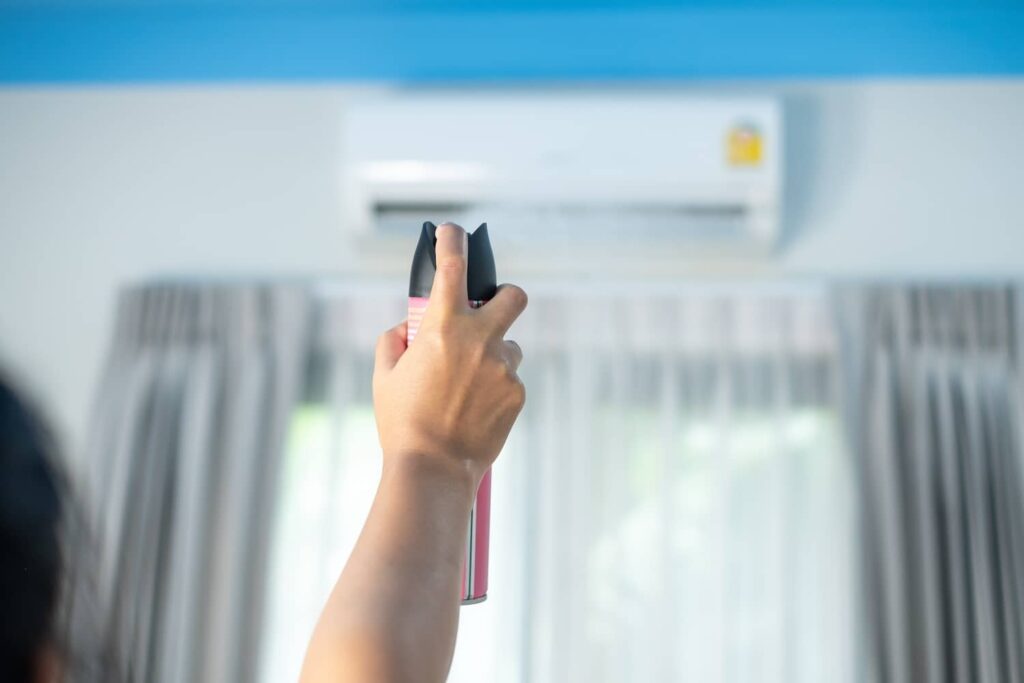
A musty smell coming from your air conditioner isn’t just unpleasant. It’s usually a sign that moisture, mold, or mildew has taken hold somewhere in your HVAC system.
Understanding why your air conditioner smells musty helps you address the problem quickly before it affects your indoor air quality or leads to bigger HVAC issues.
Humidity and AC problems go hand in hand. Most musty AC smells have straightforward causes you can quickly identify with professional inspections.
What Causes That Musty AC Smell?
The musty odor from your air conditioner comes from mold or mildew somewhere in your cooling system. AC units create the perfect environment for mold because they constantly deal with moisture, darkness, and organic material.
Your air conditioner removes humidity from indoor air as it cools. That moisture collects on the evaporator coil, drips into a drain pan, and exits through a condensate drain line. When this moisture removal process gets interrupted, standing water creates ideal conditions for mold.
Common trouble spots:
- Evaporator coil: Where moisture condenses, and mold grows on dust buildup
- Drain pan: Collects water under the coil and can harbor standing water
- Condensate line: Prone to clogs from algae and debris
- Air filter: Traps dust that holds moisture and grows mold
- Ductwork: Dark spaces where mold can spread
In humid climates across Alabama, Florida, Louisiana, and Mississippi, AC systems work overtime removing moisture. This makes regular maintenance even more important for preventing musty smells.
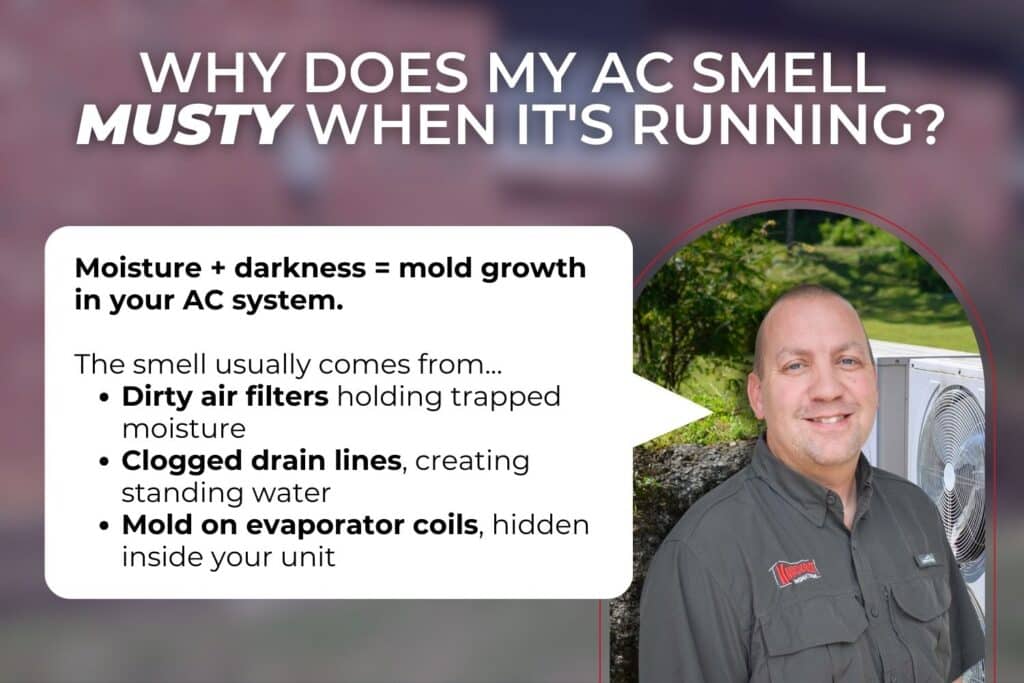
Dirty Air Filters Are Often the Culprit
Your AC filter traps dust, pollen, pet dander, and other particles. A dirty filter doesn’t just restrict airflow; it also holds moisture that creates a breeding ground for mold.
When filters get clogged, they can’t dry out properly between cooling cycles. The trapped debris stays damp, mold starts growing, and every time your AC runs, it blows that musty smell throughout your home.
Replace your filter when:
- It looks visibly dirty or clogged
- You can’t see light through it when held up
- It’s been in place for 30 to 90 days, depending onthe type
- You notice reduced airflow from vents
Standard 1-inch filters typically need replacing every 30 days. Thicker pleated filters might last 60 to 90 days. Replacing a dirty filter often eliminates musty smells within a day or two and costs just a few dollars.
Condensate Drain Line Clogs Create Standing Water
Your AC’s condensate drain line carries moisture away from the indoor unit. When this line clogs with algae, mold, or debris, water backs up into the drain pan and creates standing water that smells musty.
Signs your condensate line might be clogged:
- Water pooling around your indoor AC unit
- Musty smell that gets worse when the AC runs
- AC shutting off unexpectedly (overflow safety switch triggered)
- Drain the pan full of standing water
You can often clear minor clogs yourself. Locate the drain line access point (usually a PVC pipe with a cap near your indoor unit) and flush it with one cup of white vinegar mixed with one cup of water. For stubborn clogs, a wet/dry vacuum attached to the outside end can suck out debris.
Mold on the Evaporator Coil
The evaporator coil operates at cold temperatures where moisture constantly condenses. When dust accumulates on the coil, mold can grow and produce a strong musty smell that circulates through your home.
What contributes to coil mold:
- Dirty air filters are allowing dust to reach the coil
- Inadequate airflow from blocked vents
- Oversized AC units that don’t run long enough to dehumidify
- Lack of regular maintenance and coil cleaning
Cleaning an evaporator coil requires opening your air handler. Professional HVAC technicians use special coil cleaners that remove mold without damaging delicate coil fins. Annual AC maintenance typically includes coil cleaning.
Check the Drain Pan and Ductwork
The drain pan sits under your evaporator coil to catch condensation. A rusty, damaged, or constantly wet drain pan becomes a breeding ground for mold and bacteria.
Check the drain pan for standing water, rust, or visible mold. If you find standing water, the condensate line is likely clogged. Clean drain pans with diluted bleach solution (one part bleach to 10 parts water) to kill mold.
Ductwork in unconditioned spaces like attics or crawl spaces can also harbor mold, especially if poorly insulated or leaking. Air leaks pull in humid air that condenses and creates mold growth. Professional HVAC technicians can inspect ductwork and recommend solutions.
Quick Fixes to Try First
You can safely try these solutions on your own. However, if you’re unsure about any of the steps, or the system hasn’t been inspected in years, it’s best to call in professionals to take a look instead.
| Problem | Solution | Time Required |
| Dirty filter | Clean with a bleach solution | 5 minutes |
| Clogged drain line | Flush with vinegar and water | 15 minutes |
| Dirty drain pan | Clean with bleach solution | 20 minutes |
| Insufficient airflow | Open all vents, clear obstructions | 10 minutes |
After making these fixes, run your AC and see if the musty smell improves over 24 to 48 hours. If the smell persists, the problem likely requires professional HVAC attention.
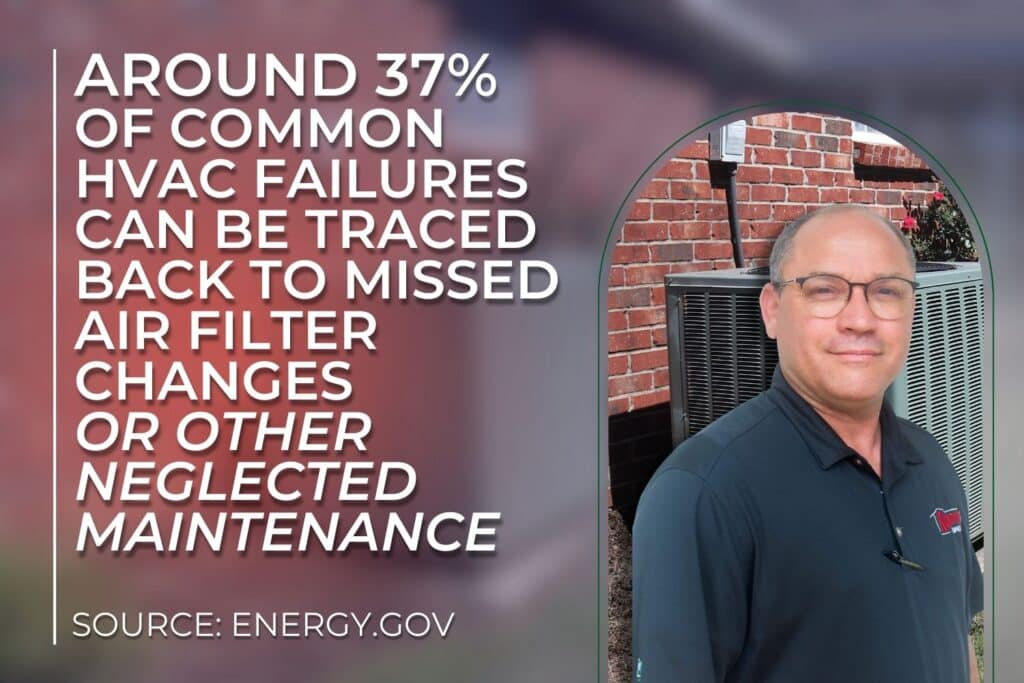
How Proper AC Sizing Prevents Moisture Problems
An often-overlooked cause of musty AC smells is improper system sizing. Oversized AC units cycle on and off too quickly, never running long enough to remove humidity effectively. This creates damp conditions where mold thrives.
Proper HVAC sizing requires load calculations. Manual J calculations determine heating and cooling loads. Similarly, Manual S helps select appropriate equipment. Manual D designs proper duct systems. When AC systems are correctly sized, they run long enough to control both temperature and humidity.
If you’re experiencing persistent moisture issues, the system might be oversized for your home. Professional load calculations can determine if this is the problem.
How to Prevent Musty AC Smells
Once you’ve resolved a musty AC smell, the last thing you want is for it to come back. Prevention is easier than fixing mold problems after they develop, and a few simple habits keep moisture under control year-round.
Simple maintenance habits keep your AC smelling fresh:
- Change air filters every 30 to 90 days
- Schedule annual professional AC maintenance
- Pour vinegar down the condensate drain line monthly
- Keep the area around your indoor unit clean and dry
- Run your AC fan for 15 minutes after turning off the cooling to dry the coil
Consider installing a UV light in your air handler. UV lights kill mold and bacteria before they can grow. For homes in hurricane-prone areas, FORTIFIED Home standards include proper HVAC installation and moisture control strategies that reduce mold risks and create more resilient homes.
Related Questions
How can a home inspection identify HVAC problems?
Home inspections evaluate HVAC systems for proper installation, sizing, ventilation, and signs of moisture issues or deferred maintenance. Inspectors identify problems that affect performance, efficiency, and indoor air quality before they become expensive repairs.
What is FORTIFIED Home certification?
FORTIFIED Home is a building standard that makes homes more resilient to severe weather. It includes proper HVAC installation, moisture control strategies, and construction methods that reduce damage from hurricanes, high winds, and storms common across the Southeast.
Why does proper AC sizing matter?
Oversized or undersized AC systems create comfort and efficiency problems. Proper sizing through Manual J load calculations ensures your system runs long enough to control humidity and temperature effectively, preventing moisture issues that lead to mold growth.
What other moisture problems should homeowners watch for?
Beyond AC issues, check for condensation on windows, water stains on ceilings or walls, peeling paint, and musty smells in crawl spaces or attics. These signs indicate ventilation or moisture control problems that need attention.
When to Call a Professional
Most musty AC smells require HVAC technician attention for thorough cleaning and repairs. However, home inspections play an important role in identifying underlying issues that contribute to recurring problems.
Call a home inspector when:
- You’re buying a home and want the HVAC system professionally evaluated
- You suspect improper AC sizing is causing persistent humidity and mold issues
- You need load calculations (Manual J, S, D) for system replacement planning
- You want to understand your home’s overall moisture control and ventilation before making HVAC investments
Call an HVAC technician when:
- DIY solutions don’t eliminate the smell within a few days
- You see visible mold growth on accessible components
- Water leaks or pools around your indoor unit
- Your system needs professional maintenance, coil cleaning, or repairs
Home inspections identify HVAC issues that affect performance, efficiency, and indoor air quality. Inspectors evaluate proper installation, sizing concerns, moisture problems, and maintenance needs that might not be obvious to homeowners.
Knockout Inspections serves homeowners across Alabama, Florida, Louisiana, Mississippi, Oklahoma, Kentucky, and Maine with thorough home inspections, including detailed HVAC evaluations and professional load calculations for system planning.
Conclusion
Musty AC smells usually come from mold or mildew in your cooling system. The most common causes are dirty air filters, clogged condensate drain lines, and mold on evaporator coils. Most issues have straightforward solutions involving cleaning, maintenance, or filter replacement.
If you’re buying a home and want peace of mind about the HVAC system’s condition, or if you need professional load calculations to properly size a replacement system, Knockout Inspections can help. Schedule your home inspection today to get detailed insights into your HVAC system’s performance and any underlying issues affecting your indoor air quality.