
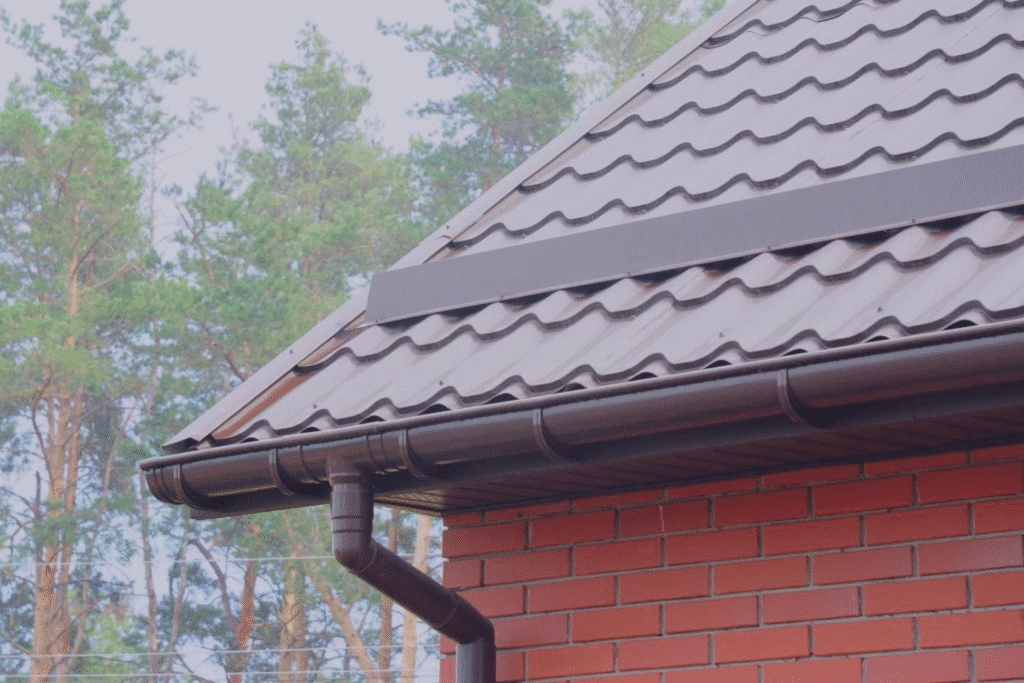
A roof rain diverter is a metal or plastic strip that redirects water away from one spot, like a doorway or a lower roof section. It can help in a narrow case, but it often trades one water problem for a bigger one, which is why Knockout Inspections and the FORTIFIED program both steer homeowners toward better fixes.
This guide covers what a rain diverter does, whether it actually works, the drawbacks, and the alternatives that protect your roof without creating new weak points.
What Is a Roof Rain Diverter?
A roof rain diverter is a strip of metal or plastic installed on the roof surface or edge to push water away from a specific area, such as a door, window, walkway, or lower roof.
Homeowners usually look at one after noticing a recurring nuisance:
- Heavy water flow over the entry doors
- Splash back against the siding or windows
- Concentrated runoff onto a lower roof section
- Water dripping onto a walkway
The idea is simple. The problem is how the diverter interacts with a roof that is already engineered to shed water a certain way.
Do Roof Rain Diverters Actually Work?
Yes, in a narrow sense: a rain diverter can redirect water away from a doorway or walkway in the short term. The catch is that it usually moves the problem rather than solving it, and it can add new risks to the roof itself.
A diverter sends water sideways into a new path. That concentrated flow often lands on another part of the roof, a gutter that was not sized for it, or the ground near the foundation. So the puddle by the front door becomes a soaked flowerbed or an overworked lower roof. For a one-off, low-stakes spot, a diverter may be fine. For protecting the roof system and the home, the trade-offs usually outweigh the benefits.
Why Rain Diverters Can Be Problematic
Rain diverters are not always compatible with how modern roofs are built to drain. They tend to work against the system instead of with it.
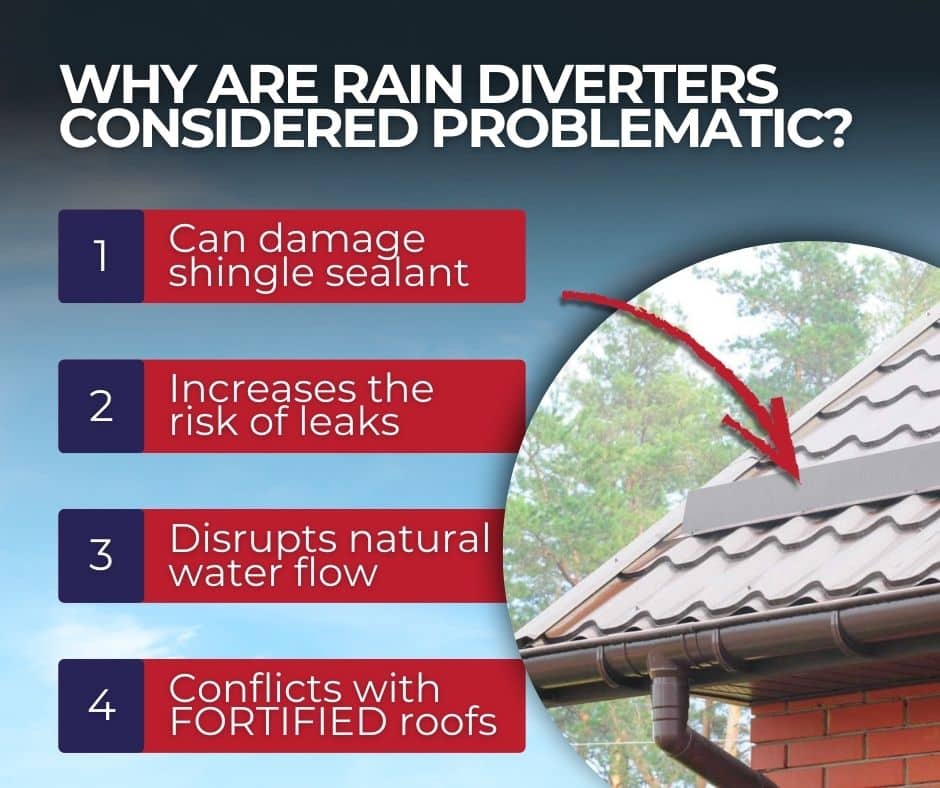
Risk of Shingle Damage
Most diverters are fastened on top of or through shingles, which can break the shingle sealant and create weak points. Per IBHS FORTIFIED guidance, attachments that disturb shingle adhesion or require penetrations raise the risk of wind damage and water intrusion. Once the sealant is broken, shingles lift more easily in a storm.
Increased Leak Potential
Anything fastened to the roof surface adds a potential leak point. Improper fastening, sealant failure, or normal expansion and contraction can let water slip under the roofing over time. A diverter that looks secure on day one can leak a year later.
Ice and Debris Buildup
A diverter is a ledge, and ledges catch leaves, twigs, and grit. In cooler or transitional areas, it can also trap ice. That buildup blocks flow and can push water back under the shingles. Debris is a concern across every region Knockout Inspections serves.
Interference With Drainage
Roofs are designed to move water down and off quickly. Pushing it sideways or pooling it in a new spot overloads other parts: lower roof sections wear faster, siding and trim take more splash, and gutters get overwhelmed.
Why Rain Diverters Are Discouraged in FORTIFIED Roofs
FORTIFIED roof standards focus on a sealed roof deck, properly adhered shingles, and water moving in predictable paths. The FORTIFIED Home program discourages rain diverters because they can damage shingle sealant, add uplift risk in high winds, and create failure points in a storm. The program’s whole approach is to strengthen the roof system, not bolt accessories onto it. If you are pursuing a FORTIFIED evaluation or renewal, a diverter can work against you.
Better Alternatives to a Rain Diverter
Instead of attaching something to the roof, fix the drainage with solutions that work with the system.
Right-Sized Gutters and Downspouts
The most effective fix is usually a better gutter setup: correct sizing for the roof area, enough downspouts for heavy flow, proper slope, and extensions that carry water away from the foundation.
Proper Drip Edge
Drip edge guides water off the roof and into the gutter. When it is missing or installed incorrectly, water runs behind the gutter and soaks the fascia. Correct drip edge often solves runoff with no add-on device.
Kickout and Valley Flashing
Where a roof meets a wall, a kickout flashing steers water into the gutter instead of down the siding. In valleys that dump too much water into one path, proper valley flashing manages the flow safely. Both are built into the roof rather than stuck on top of it.
Surface Grading and Drainage
Sometimes the roof is fine, and the issue is where water lands. Improving the ground slope, adding splash blocks, or installing a drain can protect the home without touching the roof.
FORTIFIED Roof Upgrades
FORTIFIED roof upgrades seal the deck, improve attachment, and strengthen edges, so the roof handles heavy rain and high wind without the band-aid of a diverter.
What Does a Rain Diverter Cost?
A basic aluminum rain diverter strip runs roughly $15 to $40 at a hardware store, and professional installation typically adds $100 to $300, depending on access and roof type. That low price is part of the appeal. But weigh it against the cost of a repair if the fasteners leak or the disturbed shingles fail in a storm. A correctly sized gutter run or proper flashing costs more up front and protects far more.
Related Questions to Explore
Do rain diverters cause leaks?
They can. Because most are fastened through or onto shingles, they add penetration and sealant points that can fail over time. A diverter installed over disturbed shingle sealant is more likely to leak than a roof left intact with proper flashing.
Can you put a rain diverter on a metal roof?
You can, but it is risky. Fastening into metal panels creates penetrations that have to be sealed perfectly, and sealant fails eventually. On metal roofs, proper flashing and gutter design are almost always the better route.
How do you divert water in a roof valley with no gutter?
A valley with no gutter is better solved with correct valley flashing and a downspout or splash path at the bottom, not a surface diverter. Concentrated valley water is exactly the kind of flow a stuck-on diverter tends to mishandle.
Is a rain diverter a good long-term fix?
Rarely. It is a quick patch for a narrow nuisance. For lasting protection, right-sized gutters, proper drip edge, and flashing address the cause instead of the symptom.
Will a rain diverter affect my FORTIFIED designation?
It can. Because FORTIFIED prioritizes an intact, sealed roof, an add-on that penetrates or disturbs shingles may conflict with the standard. Check with your evaluator before installing one.
When to Call a Professional
If water keeps targeting the same spot, have the roof looked at before you buy a diverter. A certified inspector and FORTIFIED Evaluator can tell you whether the real issue is gutters, drip edge, flashing, valley design, or grading, and which fix actually protects the home. Consider a professional if your roof is aging, you see staining on fascia or siding, you are planning a roof replacement, or you are working toward a FORTIFIED designation.
Knockout Inspections evaluates roof drainage and FORTIFIED readiness across Alabama, Florida, Louisiana, Mississippi, and Kentucky, with FORTIFIED evaluations available nationwide.
Conclusion
A roof rain diverter is a cheap, quick fix that often creates new problems:
- It can damage shingle sealant and add leak and uplift risk
- It usually moves runoff to another weak spot instead of solving it
- Gutters, drip edge, flashing, and FORTIFIED upgrades fix the cause
Before adding anything to your roof, find out what is really driving the runoff. Schedule a roof and FORTIFIED evaluation with Knockout Inspections [LINK] and fix the source, not the symptom.