For homeowners wondering how to choose a roofer in today’s environment, understanding FORTIFIED credentials provides a clear way to separate claims from proven standards.
When homeowners think about protecting their home, the roof is one of the most critical components to get right. It shields everything beneath it, including the structure, belongings, and the people inside, from wind, rain, hail, and flying debris. Yet roofing is still often treated as a commodity decision. Many homeowners focus on the lowest bid, the fastest timeline, or what appears “good enough” on the surface.
In storm-prone regions, that approach can become expensive very quickly.
This is where FORTIFIED roofing and IBHS-trained FORTIFIED roofers stand apart. A FORTIFIED roof is not just another roof. It is a system designed, installed, and independently verified to perform better during severe weather. Being a FORTIFIED roofer is not a marketing label. It reflects additional training, accountability, and a focus on building science rather than shortcuts.
What Is the FORTIFIED Home Program?
The FORTIFIED Home program was developed by the Insurance Institute for Business and Home Safety, a nonprofit organization supported by insurers and focused on reducing property damage from natural disasters.
Unlike building codes, which are often reactive and shaped by politics or minimum safety thresholds, IBHS standards are based on real-world testing. At the IBHS Research Center, full-scale homes are exposed to conditions such as:
- Hurricane-force winds
- Wind-driven rain
- Hail impacts
- Ember storms associated with wildfires
These tests reveal how homes actually fail during severe weather. FORTIFIED standards are built by identifying those failure points and designing construction methods that reduce or prevent them.
What Does It Mean to Be a FORTIFIED Roofer?
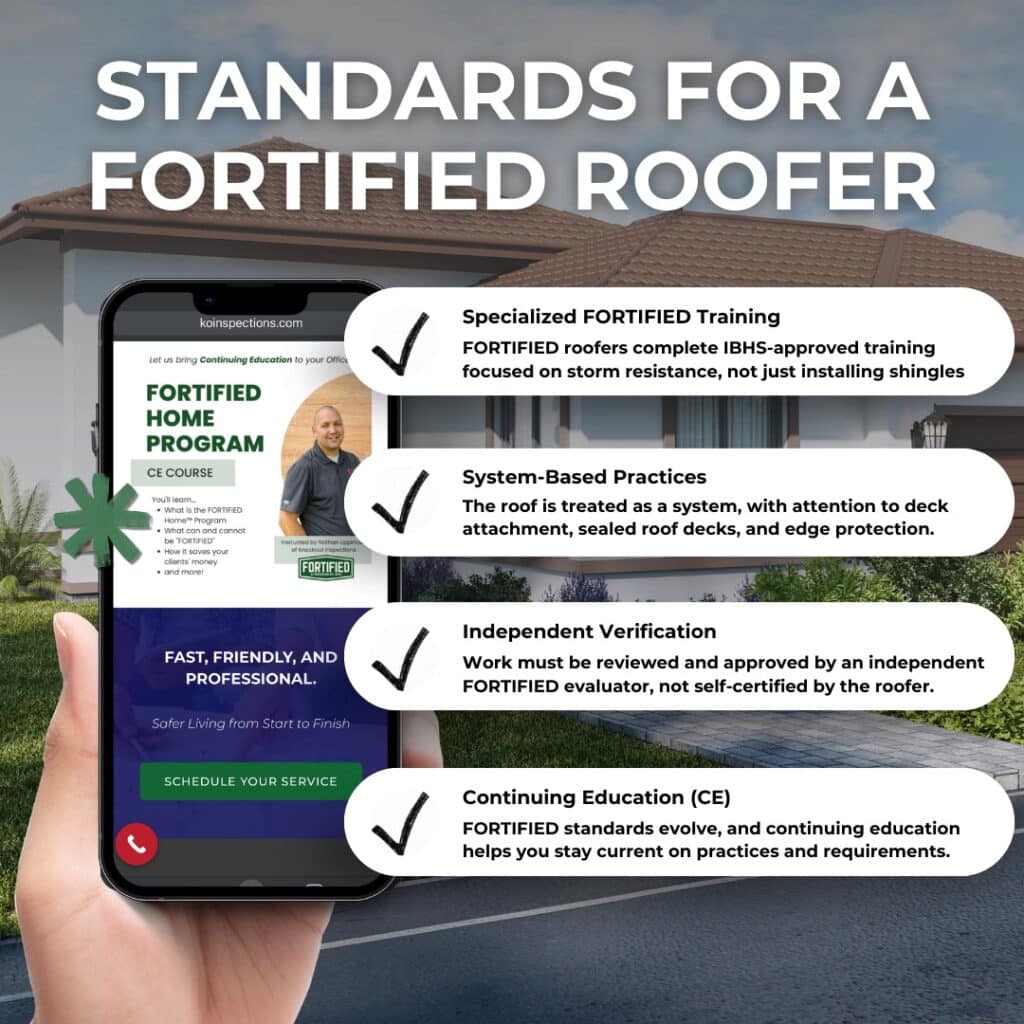
A FORTIFIED roofer is a contractor who has completed IBHS-approved training specific to FORTIFIED roofing requirements. This training focuses on the details that determine whether a roof stays intact during a storm or becomes the starting point for widespread damage.
FORTIFIED roofers are trained to understand:
- Proper roof deck attachment methods
- The role of sealed roof decks in water intrusion prevention
- Enhanced edge and perimeter protection
- Correct fastener spacing and placement
- Wind-resistant shingle installation practices
- Documentation and verification requirements
This training goes beyond standard manufacturer certifications. Manufacturer programs typically focus on installing a specific product correctly. FORTIFIED training focuses on how the entire roof system performs under stress.
For homeowners learning how to choose a roofer, this distinction matters. A properly trained roofer understands not just how to install materials, but why each step matters.
Why FORTIFIED Roofing Is More Important Than Ever
Today’s roofing choices are being shaped by more than personal preference. Insurance risk, storm history, and long-term durability all play a role.
Severe Weather Is Increasing in Frequency and Cost
Storms are becoming more frequent, more intense, and more expensive. Homeowners across coastal and inland regions are seeing:
- Higher insurance deductibles
- Fewer coverage options
- Increased non-renewals
- Rising premiums
Insurance companies are no longer evaluating risk based on location alone. They are paying closer attention to how homes are built and how they perform during storms. FORTIFIED roofing directly addresses the most common sources of storm-related damage.
Building Codes Set Minimums, Not Best Practices
One of the most common misconceptions in construction is the belief that meeting building requirements means a home is well-protected. In reality, building codes establish minimum safety standards. They are not designed to prevent damage or ensure quick recovery after a storm.
In many areas:
- Code allows a roof deck attachment that is vulnerable to uplift
- Water intrusion protection is limited
- Edge protection may be insufficient for high winds
FORTIFIED roofing fills these gaps by focusing on damage prevention rather than minimum compliance.
Most Storm Damage Begins at the Roof
Research consistently shows that when a roof fails, the rest of the home becomes vulnerable. Once wind or water enters the structure, damage spreads rapidly.
Common roof-related failure points include:
- Poorly attached roof decking
- Missing shingles that expose the underlayment
- Water intrusion through unsealed joints
- Failed flashing and roof edges
FORTIFIED roofing standards are designed to address these exact vulnerabilities.
Understanding the Three Levels of FORTIFIED
Although we’re focusing on roofing, it helps to understand how FORTIFIED fits into a broader resilience framework.
FORTIFIED Roof
This designation focuses specifically on the roof system and includes:
- Enhanced roof deck attachment
- A sealed roof deck
- Wind-rated roofing materials
- Improved edge and flashing details
This is the most common and accessible FORTIFIED designation for existing homes.
FORTIFIED Silver and Gold
Silver and Gold designations expand protection to include:
- Windows and doors
- Gable end bracing
- Continuous load paths
- Foundation connections
Even at the Roof level alone, homeowners can see meaningful improvements in performance during storms.
Why Being a FORTIFIED Roofer Matters to Homeowners
For homeowners, the value of a FORTIFIED roofer shows up in the details that are easy to miss but critical during severe weather.
Higher Construction Quality
FORTIFIED roofers are trained to focus on installation details that are often rushed or skipped in traditional roofing jobs. These details may not be visible once the roof is complete, but they play a major role during severe weather.
Independent Verification Adds Accountability
One of the defining features of FORTIFIED roofing is that it is not self-certified. The work must be reviewed by an independent FORTIFIED Evaluator.
This ensures:
- Installation practices were followed correctly
- Required documentation and photos were submitted
- The roof meets IBHS standards, not just marketing claims
This independent review protects homeowners and rewards contractors who follow best practices.
Potential Insurance and Long-Term Benefits
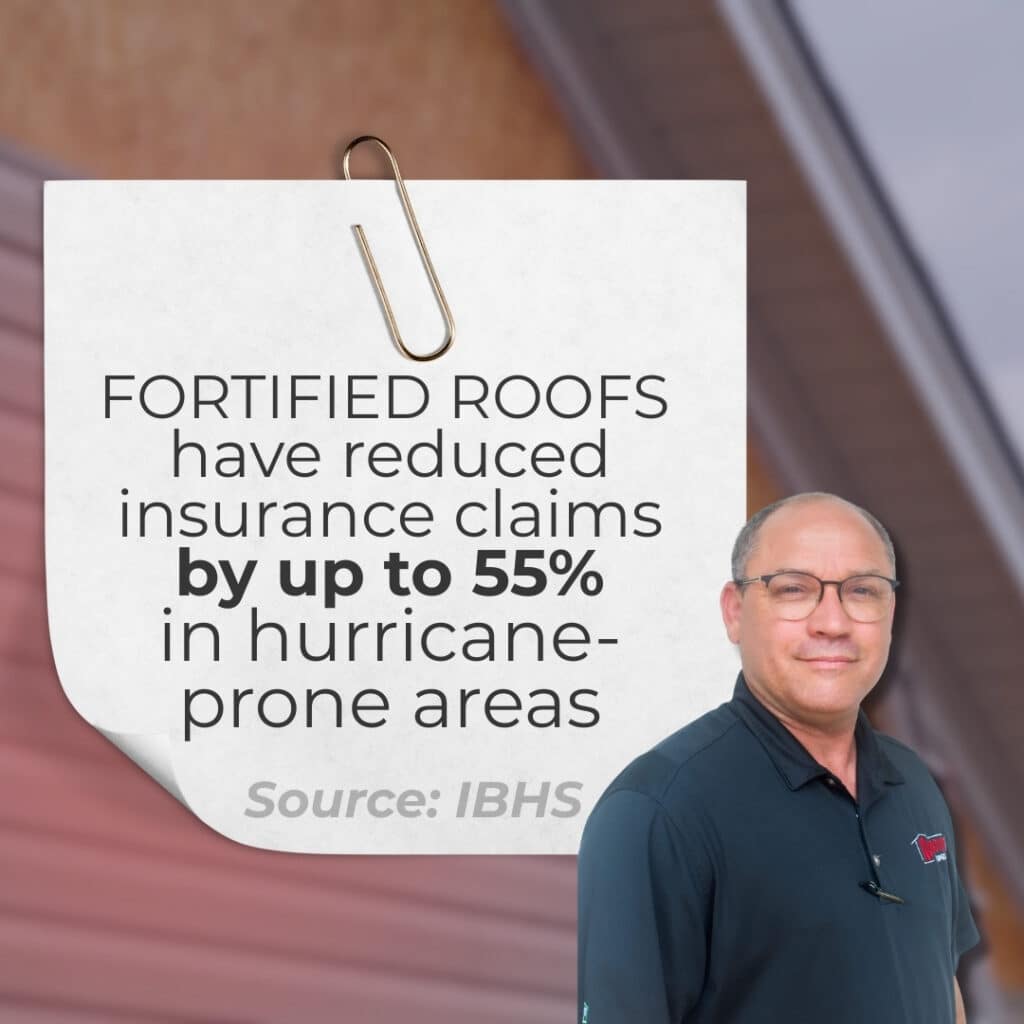
Many insurers offer incentives for homes with verified FORTIFIED roofs, including:
- Premium discounts
- Deductible reductions
- More favorable underwriting
These benefits vary by market, but they are becoming more common as insurers recognize reduced risk.
Increased Home Value and Market Confidence
A FORTIFIED designation is tied to the home, not just the contractor. It can:
- Increase buyer confidence
- Differentiate a home in competitive markets
- Reduce inspection concerns during resale
For homeowners thinking long-term, this can be a meaningful advantage.
How Can I Verify a Roofer’s FORTIFIED Credentials?
Not every contractor who mentions FORTIFIED has proper training. Verification is critical.
Ask for Proof of IBHS Training
A legitimate FORTIFIED roofer should provide documentation showing completion of IBHS-approved training. Substituting manufacturer certifications or avoiding the question is a red flag.
Check the Official IBHS FORTIFIED Directory
IBHS maintains a public directory of trained professionals. Homeowners can search by contractor or company name to confirm active FORTIFIED training status. If a roofer is not listed, they are not currently recognized by IBHS.
Final Thoughts
When homeowners ask how to choose a roofer, the answer goes beyond price or speed. In regions exposed to severe weather, roofing decisions have long-term consequences.
Choosing a roofer with FORTIFIED credentials helps ensure resilience is in mind the whole time. It is an investment in performance, accountability, and protection that extends beyond basic code compliance.
Before a roofing project or choosing a contractor, homeowners can work with Knockout Inspections to complete a FORTIFIED evaluation or other inspection service. Book a visit with our expert team today.